SUMMER OF BABEL
by TOMOKI KOBORI
Synopsis
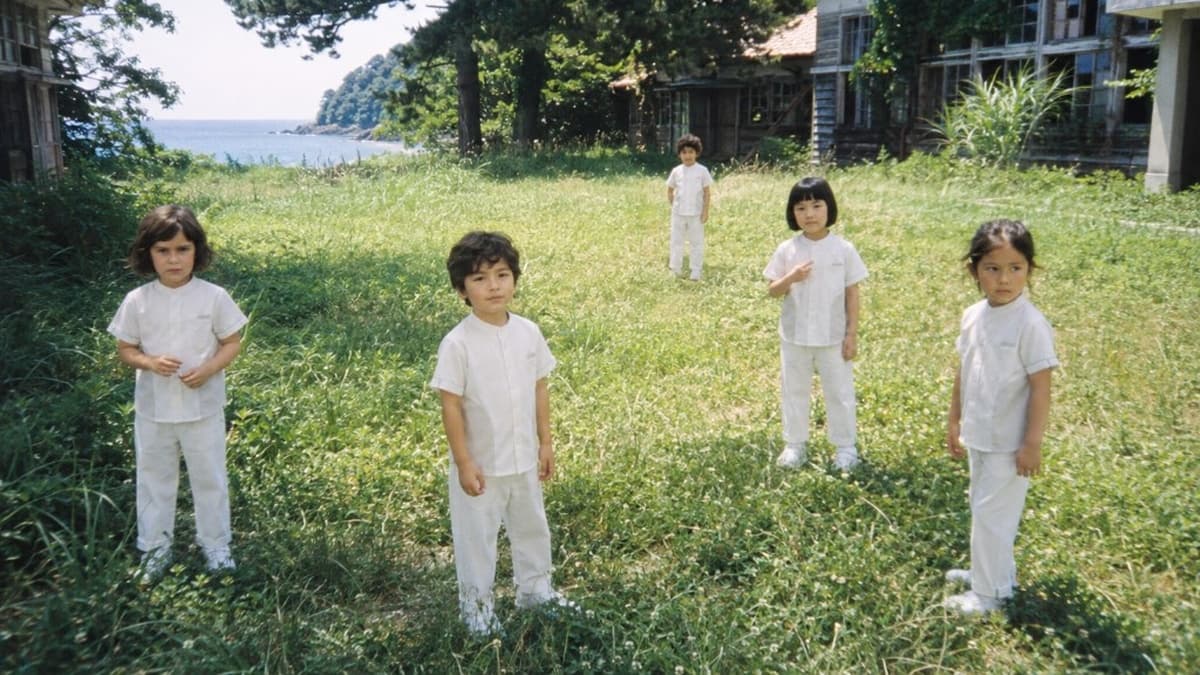
Five six-year-olds. Five mother tongues. No shared language. SUMMER OF BABEL follows Aoi (Japanese), Naya (Navajo), Amir (Arabic), Ane (Basque) and Lani (Hawaiian) through 38 days of summer at an abandoned seaside school camp in Japan. There are no adults and no script. Nobody wrote this summer. It was run once inside a local AI simulation, and what happened there was recorded, then turned into images and sound. The film is a documentary of children who existed only as data. Unable to understand each other, the children connect through their bodies, glances, objects, waiting, copying and getting it wrong. Small signals appear and drift. "huri" comes to mean food. "hau" starts as a call to play, then stretches to water, taking turns and saying yes. "hąʼ" is a warning. And "momo" points across a narrow bridge, unless you are the child looking at the hermit crab. This is the fragile moment just before a language takes shape. The theme song "hau huri momo" uses only the sounds born that summer. There is no dialogue, so there are no subtitles. The film was inspired by the beginnings of Japanese Sign Language, when deaf children in 1878 Kyoto brought the signs they used at home to a new school and slowly made them shared. It is not a reenactment, and all the children are fictional. We call it a "simumentary": a film between simulation and documentary.
Project members
- directorTOMOKI KOBORI
Discover more films

Become a partner of the festival!
mk2agency@mk2.com